


November Intake Open In Birmingham What’s Actually True in 2026
There is no confirmed direct degree entry November intake at Birmingham’s main universities in 2026 University of Birmingham, Birmingham City University (BCU), Aston University, and University College Birmingham all run their primary intakes in September, with most also offering a January intake and, in BCU’s case, a limited May/June cycle. What a lot of search results call a “November intake in Birmingham” is almost always something else: the November application deadline for the January intake, not a separate start date in November itself. This guide clears up that confusion properly and gives you the realistic options if you genuinely want to start sooner than September.
Why November Intake Confuses So Many Applicants
Search a phrase like uk november intake and you’ll find dozens of pages listing “November and January intakes” side by side, as if they’re two separate entry points. In reality, most of what’s being described is one thing: applications for the January intake typically close in November, and that November deadline gets mislabelled as an intake in its own right by outdated or poorly researched consultancy sites. Several of the articles ranking for this exact search haven’t been updated since 2023, which is part of why the confusion persists.
This matters because it changes what you should actually search for. If you’re hoping to start classes in November, that’s a different and much rarer thing than applying by a November deadline for a January start.
Is There a November Intake in Birmingham? Here’s the Real Answer
For direct degree study at Birmingham’s core universities, no none of the four major Birmingham institutions currently run a distinct November start date for standard undergraduate or postgraduate degrees. Here’s what each actually offers for 2026 entry
| University | Confirmed Intakes | November Start? |
| University of Birmingham | September (primary), select January starts | No |
| Birmingham City University (BCU) | September (largest), January, limited May/June | No |
| Aston University | September (primary), select January starts | No |
| University College Birmingham | September (primary) | No |
Where a genuine November start does exist is not at degree level, but in two specific, narrower categories:
- Pre-sessional English language courses attached to universities, which often run in rolling or monthly cohorts including intakes close to or in November to prepare students for a January degree start
- Pathway and foundation colleges (such as international colleges affiliated with a university) that sometimes run additional cohort starts outside the standard September/January pattern, depending on the course and current demand
If you’ve seen November intake advertised by a private consultancy or agent site specifically for a Birmingham university degree, it’s worth verifying directly with the university’s own admissions page before treating it as confirmed, since this is exactly where the confusion in search results originates.
November Intake Universities in the UK Where It Does Genuinely Exist
While Birmingham’s core universities don’t run a direct November degree start, a small number of universities elsewhere in the UK do offer November starts for specific undergraduate and postgraduate courses this is real, but limited and course dependent rather than universal. Universities that have offered November-start options for select courses include Coventry University, the University of Bedfordshire, the University of Derby, Teesside University, and the University of Greenwich. Availability changes year to year and by course, so always confirm directly on the specific course page rather than assuming it carries over from a previous year.
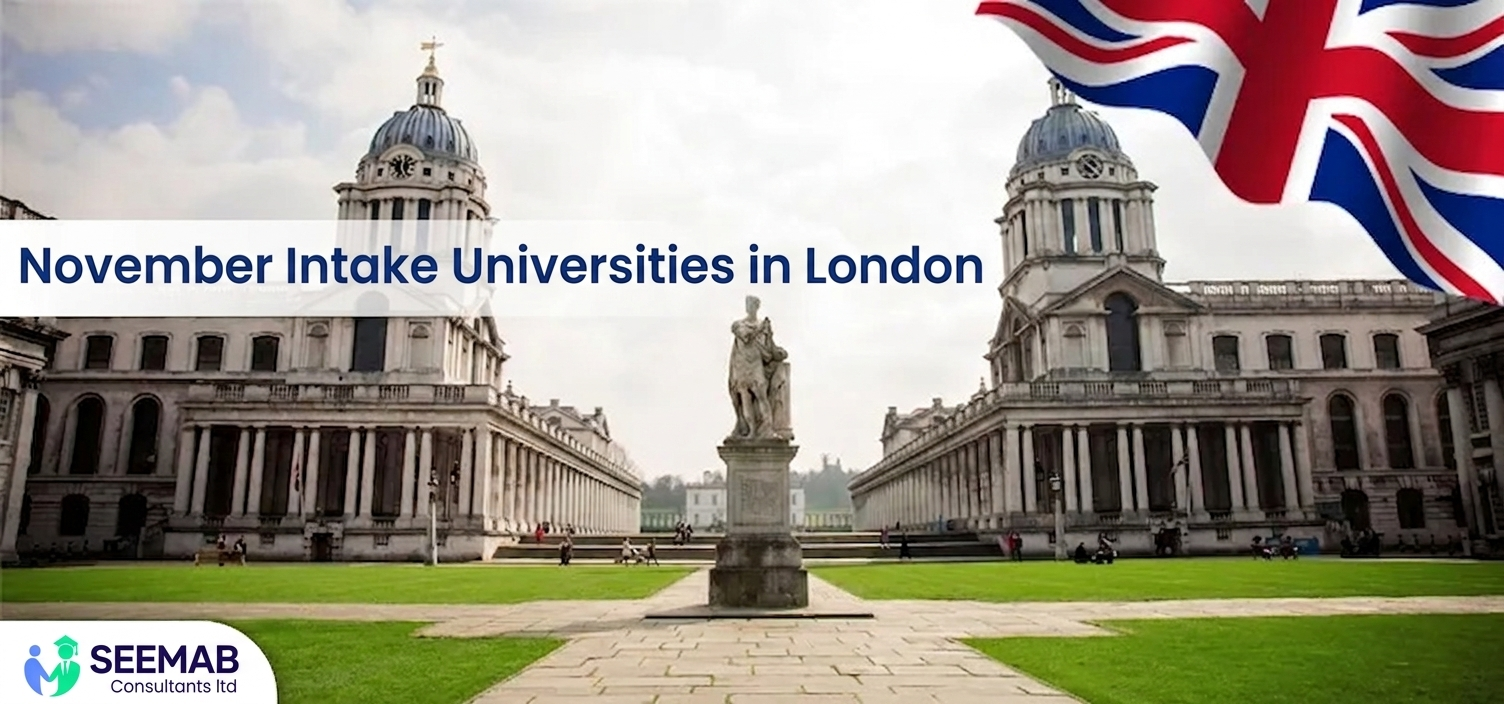
November Intake Universities in London
The same pattern holds in London a genuine, university-wide November degree intake is uncommon, but individual institutions occasionally run November or rolling starts for specific postgraduate, pathway, or pre-sessional programmers similarly to Birmingham. If London is also on your shortlist, apply the same rule: check the specific course page for the exact start date rather than relying on a general November intake claim from a third-party site.
How Many Intakes Are There at Birmingham City University?
Birmingham City University runs three intakes: September, which is the largest and most popular; January, which offers a smaller but genuine range of courses; and a limited May/June intake, available only for selected programmer. There is no fourth, separate November intake at BCU for standard degree study the November date applicants typically encounter is the recommended application deadline to secure a place in the January intake, not a start date of its own.
University November Intake What About Postgraduate Courses Specifically?
Postgraduate courses across UK universities, including those in Birmingham, are somewhat more flexible than undergraduate degrees, since many run on rolling admissions rather than fixed intake dates. Even so, this flexibility applies to when you can apply, not necessarily to a distinct November start the vast majority of postgraduate taught courses at Birmingham universities still begin teaching in either September or January, with rolling admissions simply meaning the application window stays open longer rather than the course start date shifting.
When to Apply for Birmingham Universities in 2026
Whether you’re targeting September or January entry, the practical planning window looks like this:
| Target Start | When to Apply | Typical Application Window |
| September 2026 | As early as possible, ideally 9–12 months ahead | Applications generally open the previous autumn |
| January 2027 | By around October–November 2026 | Application window commonly runs June to November of the preceding year |
| Foundation/pathway courses | Check individual college calendar | Often rolling, with several intake points across the year |
If you’re specifically hoping to start sooner than September and a direct degree course isn’t available in time, a pathway or foundation course with a rolling intake is often your fastest genuinely available route into a Birmingham university’s main degree the following term.
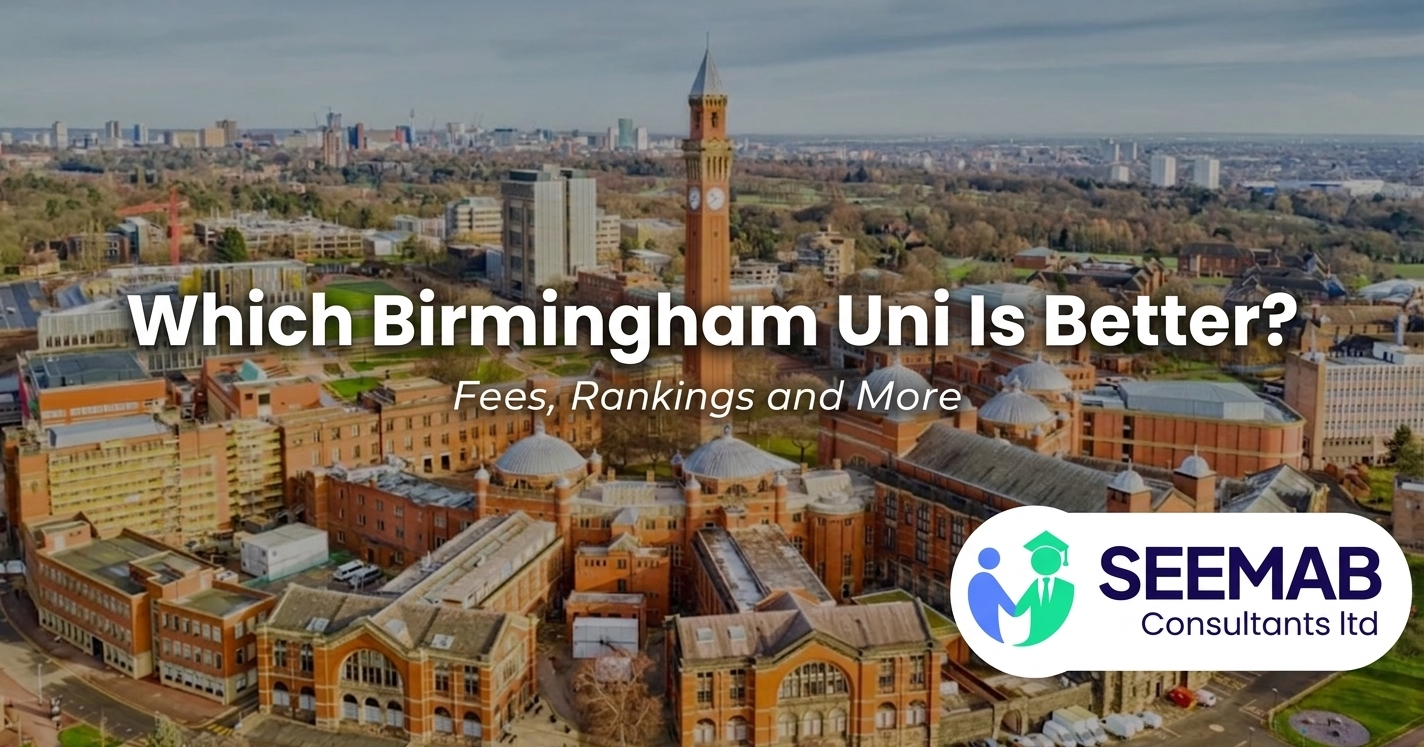
Which Birmingham Uni Is Better?
There isn’t a single correct answer here it depends on what you’re prioritizing, since each of Birmingham’s universities has a different strength:
- University of Birmingham a Russell Group research university, strongest for academic prestige, research intensive courses, and postgraduate research routes
- Birmingham City University (BCU) strongest for practical, industry-connected courses, with a wider range of intake flexibility (three intakes) than most Birmingham institutions
- Aston University known particularly for business, engineering, and strong graduate employment outcomes
- University College Birmingham specialized in vocational and applied fields such as hospitality, culinary arts, and business, with close industry links
The “better” choice depends on your course, your career goals, and whether you value research reputation or applied, career-focused teaching more.
Which Intake Is Best for Birmingham?
September is the best intake for Birmingham universities for most applicants, since it offers the widest course selection, the most scholarship opportunities, and the fullest campus experience, including orientation and freshers’ activities that smaller intakes don’t replicate to the same scale. January is a strong second option if you’ve missed September or need extra time to meet English or academic requirements, though course choice and funding availability are narrower. May/June, where offered (as at BCU), suits a very specific subset of applicants on eligible courses only.
Which Intake Is Best for the UK Overall?
September remains the best intake across the UK generally, not just in Birmingham, for the same core reasons: it’s the primary academic year start that almost every university and course aligns with, it carries the deepest scholarship funding, and it gives you the most time to settle in before the bulk of the academic calendar’s key deadlines and assessments begin. January suits applicants prioritizing a faster start over course breadth, and rarer options like November or specific pathway starts suit a narrower group who need the earliest possible route in, regardless of course choice.
Is Birmingham a Good City to Study In?
Birmingham is widely regarded as one of the UK’s strongest second-tier study destinations after London, combining four established universities, a large and diverse student population, comparatively affordable living costs relative to London, and strong regional graduate employment opportunities, particularly in finance, engineering, and professional services. If affordability and course variety across multiple institutions matter to you, Birmingham is a genuinely competitive choice rather than a fallback city.
If You Want to Start Sooner Than September: Realistic Options
If a distinct November start isn’t genuinely available for your target course, here are the realistic paths to starting sooner without waiting a full year:
- Check January intake availability directly on your target university’s course page this remains the fastest confirmed alternative to September at all four Birmingham universities.
- Look into pathway or foundation programmers, which more frequently run rolling or off-cycle starts, including into autumn and winter.
- Consider a pre-sessional English course if your English test score is the only barrier these often have flexible start dates and can feed directly into a January degree start.
- Widen your search beyond Birmingham specifically, since a small number of universities elsewhere do run genuine November starts for select courses, if timing matters more to you than location.
- Contact the university’s international office directly before relying on a third-party site’s claim of a “November intake,” since this is the fastest way to confirm what’s actually current for your exact course.
How Seemab Consultants Can Help Students Planning a Birmingham Intake
Students searching for a November intake in Birmingham can often find conflicting information about university start dates, application deadlines, January entry, and alternative study routes. Seemab Consultants Ltd helps prospective international students understand these options and choose a suitable route based on their academic background, preferred subject, and intended study date. As an education consultancy specializing in UK study opportunities, Seemab Consultants can provide guidance on university and course selection, eligibility requirements, application preparation, supporting documents, and the admissions process. This can be particularly helpful when a course does not offer a direct November start and the student needs to consider another entry point.
Our services provide personalized support for students applying to UK universities For students who want to begin their studies sooner than the main September intake, the available alternatives may include January entry, foundation programmers, pathway courses, or other eligible intakes. Seemab Consultants can help students compare these options and understand which universities and courses may be suitable for their individual circumstances.
Before applying, students should always confirm the course start date, entry requirements, application deadline, tuition fees, and availability for their chosen programmer. A November application deadline does not necessarily mean that teaching begins in November. Getting this distinction right can help students avoid applying for an unsuitable intake or relying on outdated information.
If you are planning to study in Birmingham, UK, and need help finding a suitable university, course, or upcoming intake, Seemab Consultants Ltd can guide you through the process and help you explore the study options available for your profile. If you’re still exploring your options, visit our UK Courses page to explore relevant study opportunities
Frequently Asked Questions
Is November intake available in the UK?
Not as a standard, university-wide intake. A small number of universities offer November starts for specific undergraduate and postgraduate courses, but it isn’t a general option across UK higher education the way September and January are.
Is there any November intake in the UK?
Yes, but narrowly limited to specific courses at a handful of universities (such as Coventry, Bedfordshire, Derby, Teesside, and Greenwich for certain programmers), rather than being widely available.
Is there a November intake in the UK for Birmingham universities specifically?
No confirmed direct degree-entry November intake exists at University of Birmingham, BCU, Aston, or University College Birmingham for 2026. What’s commonly mislabelled as a November intake is the November application deadline for the January intake.
Which universities have a November intake in the UK?
Coventry University, the University of Bedfordshire, the University of Derby, Teesside University, and the University of Greenwich have offered November-start options for select courses, though availability varies by year and programmer.
How many intakes are there at Birmingham City University?
Three: September (the largest), January, and a limited May/June intake available only for selected programmers.
Which Birmingham uni is better?
It depends on your priorities University of Birmingham leads on research prestige, BCU on practical and industry-focused courses with more intake flexibility, Aston on business and graduate employment outcomes, and University College Birmingham on vocational specialisms like hospitality and culinary arts.
Which intake is best for Birmingham?
September, for the widest course choice and strongest scholarship availability, with January as a solid second option if you need more preparation time.
Which intake is best for the UK?
September remains the best intake UK-wide for the same reasons broadest course availability, deepest funding, and the fullest academic-year experience.
Is Birmingham a good uni city?
Yes Birmingham offers four established universities, a large student community, and comparatively affordable living costs relative to London, making it a strong choice rather than a fallback option.
When should I apply for Birmingham universities in 2026?
For September 2026 entry, as early as possible given standard deadlines have largely passed by mid-cycle; for January 2027 entry, aim to apply by around October–November 2026, since that’s when most application windows close.
Final Thoughts
If you came here specifically searching for a November intake in Birmingham, the honest answer is that it doesn’t currently exist as a direct degree-entry option at the city’s main universities what you’re most likely finding is the November deadline for January entry, recycled across several outdated pages as if it were something else. The good news is that January intake is a real, fully confirmed alternative at every major Birmingham university, and if timing genuinely can’t wait that long, a pathway, foundation, or pre-sessional route can still get you into a Birmingham classroom sooner than a full year’s wait. Always verify directly with the university’s own admissions page before acting on a third-party site’s claim it’s the one step that will save you the most time in the long run. If you’d like to explore this topic further you can read our related guide on UCAS Deadline 2026